

The fifth greatest Chinese invention
Chinese porcelain, highly prized across Europe and the Islamic world, was one of the country’s major exports and the city of Jingdezhen (Ching-te-chen), in Jiangxi Province, has been the epicentre of porcelain producing for more than 1700 years.
“From time-to-time I have stayed in Jingdezhen to administer the spiritual necessities of my converts, and so have interested myself in the manufacture of this beautiful porcelain, which is so highly prized, and is sent to all parts of the world. Nothing but my curiosity could have ever prompted me to such researches, but it appears that a minute description of all that concerns this kind of work might, somehow, be useful in Europe.”
A Yuan Dynasty ‘Cizhou’ Sgraffito Meiping Vase, c.1279–1368 A.D., 36cm Est AUD2,000–4,000
Chinese porcelain, highly prized across Europe and the Islamic world, was one of the country’s major exports and the city of Jingdezhen (Ching-te-chen), in Jiangxi Province, has been the epicentre of porcelain producing for more than 1700 years.
There are a number natural factors that can be attributed to the rise of Jingdezhen porcelain.
The first factor is the region's geology. Mount Gaoling, to the northeast of the city is essentially a clay mountain. Derived from the name of the mountain, the pure white clay is called kaolin, or ‘China clay’ in Europe.
The raw material from Gaoling is white powdery clay usually found mixed with other granular minerals. The purity of the clay is quite variable; in the best places, pure white clay was found, in other areas raw material from the ground was mined, crushed and rinsed to separate the prized white powdery clay from the surrounding material.
The second factor was that the town is located on the Yangtze River. This natural transport route provided an easy way to deliver the materials required for porcelain production. Clay could be brought down the smaller Donghe River to the city from Mount Gaoling, and pine logs delivered to supply the kilns. The finished porcelain products would be shipped down the Yangtze River to other parts of China, to Shanghai, and to the world.
Finally, it was the beauty and workmanship of the Jingdezhen white pottery that brought fame to the town. The porcelain products were noticed by the imperial court and desire for these beautiful works of art cemented the town’s future. More kilns were built to supply demand and then at the beginning of the Ming Dynasty (1368-1644), the Imperial Porcelain Factory was established there.
Porcelain was exported around the world on an unprecedented scale with the opening of the Imperial Porcelain Factory but it was during the rule of the Wanli Emperor (1573-1620) that the kilns became the main production centre for large-scale porcelain exports to Europe.
At this time, on the other side of the world the Dutch East India Company had established strong trade links with China and in the early 1600s imported millions of pieces of porcelain. The workmanship and attention to detail of the exotic Chinese porcelain impressed the Europeans and demand quickly grew.
Following the death of the Wanli Emperor in 1620, the supply of porcelain to Europe was interrupted and local Dutch potters around the town of Delft took it upon themselves to imitate the Chinese porcelain style and designs to cater for the still strong local demand. Delft designs inspired by the Chinese originals were produced widely from approximately 1630 to the mid-1700s alongside their original European patterns of similar style.
This combination of demand and trade between Europe and the East initiated a curious circle where Delftware was not only exported around Europe but also to China and Japan. Chinese and Japanese potters, seeing the designs from Europe, then made porcelain versions of Delftware for export to Europe.
The pottery tradition is still alive in Jingdezhen, where today the town still hosts pottery markets such as the Pottery Workshop.
A brief timeline of the period
Five dynasties (907-960)
Song: Northern Song (Bei Song) 960-1126; Southern Song (Nan Song) 1127-1279
Jin (1115-1234)
Yuan (1279-1368)
Ming (1368-1644)
Hongwu (1368-98)
Jianwen (1399-1402)
Yongle (1403-25)
Xuande (1426-35)
Interregnum: Ming Mid-15th Century: Zhengtong (1436-49); Jingtai (1450-57); Tianshun (1457-64)
Chenghua (1465-87)
Hongzhi (1488-1505)
Zhengde (1506-21)
JiaJing (1522-66)
Longqing (1567-72)
Wanli (1573-1620)
Tianqi (1621-27)
Chongzhen (1628-44)
Further reading
A guide to Chinese porcelain marks
The New Yorker: The European Obsession with Porcelain
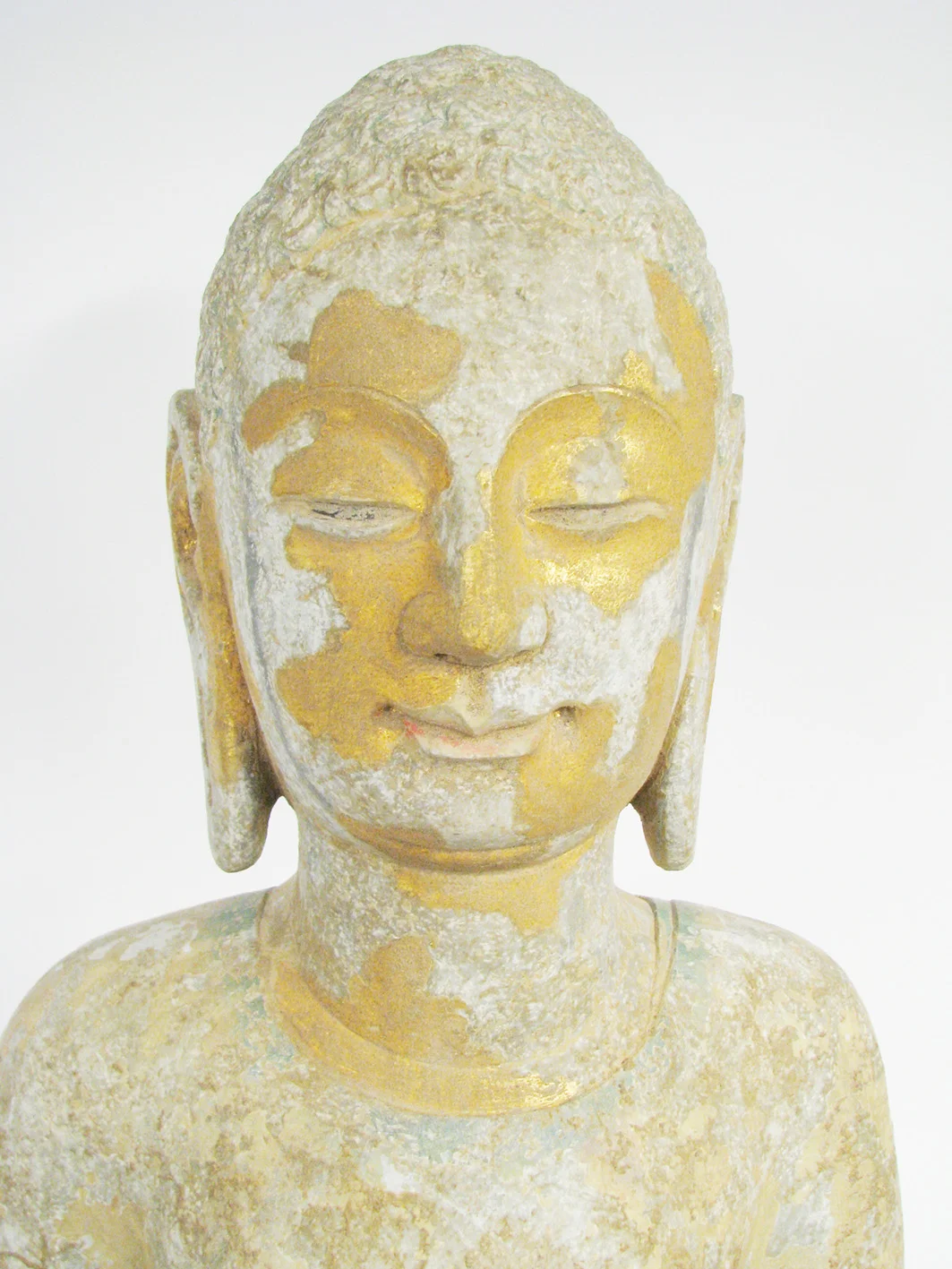
Northern Qi Dynasty, China 550-577 AD
As the Roman Empire continued its long decline in the west; in the East, the rise of a new Chinese Dynasty was taking place: The Northern Qi.
As the Roman Empire continued its long decline in the west; in the East, the rise of a new Chinese Dynasty was taking place: The Northern Qi.
Following the collapse of the Han Dynasty in the early third century, China suffered almost 300 years of war and political turmoil.
Commonly known as the Period of Disunion, it was characterised by violent power struggles between a succession of small kingdoms and repeated invasions from beyond the Great Wall. People were also arriving from the exotic lands of the east such as Persia and India and this influenced a transformation of Chinese art and culture in the north.
We may now look back at the Northern Qi Dynasty that followed this turmoil as a time of cultural convergence and cosmopolitanism, which included one of the most significant transformations of the time – the adoption of Buddhism from the east.
This convergence of Chinese culture with foreign influences produced a distinctly different style of art to that of southern China where Confucian values and the traditional 'Chinese' identity in political, cultural and religious life were being preserved.
Although the Northern Qi Dynasty only lasted about 100 years, it would have a significant impact on Chinese art for centuries to come. Buddhism brought a profound peaceful influence and with it began a distinctive minimalist style of art in line with Buddhist principles that would eventually spread throughout China.
Along with this distinctive style of art came innovative ceramic production techniques that would continue to be refined for centuries to come. Importantly due to these and other remarkable achievements, the Northern Qi Dynasty may well be considered the precursor to what is arguably the beginning of the Chinese Renaissance of art during the Tang Dynasty.
Cave Temples
Most impressive in scale were the incredible Buddhist cave temples and the sculptures held within them, of which the limestone statue pictured above is an example.
Most Northern Chinese cave temples were established by Imperial decree. Originating in Central Asia, these vast monuments were hollowed out from rock outcrops and decorated lavishly within. It was considered that the very act of creating these monuments was an act of piety resulting in the accrual of merit and spiritual liberation.
The 6th Century cave complex at Xiangtangshan, established by Imperial decree, exemplifies the importance of Buddhism in the life and culture during the time of the Northern Qi dynasty.

A Northern Qi Dynasty Gilded Limestone Sculpture Of Buddha, c.550-577 AD 153 x 40cm, sold AU$29,000 (image)
The Northern Qi statue (top), is an example of the quality of material culture that is consigned with us. Originally from the collection of a Hong Kong resident, this work was purchased by an astute Australian collector at one of our past auctions.
Of museum importance and quality the sculpture exhibits superb detail and craftsmanship. Standing above a separate lotus base wearing a diaphanous robe, his left hand raised in vitarka mudra and his right hand in bhumisparsa mudra, the fine-featured visage with serene expression flanked by pendulous ears below a wavy coiffure and top knot at apex, gilded and decorated with polychrome mineral earth pigments.
A similar work was sold by Sotheby’s New York, Fine Chinese ceramics and works of art, March 31 and April 1, 2005, lot 86.
See also:
- The Art Gallery of NSW, Sydney, Australia, exhibition 2008, ‘The Lost Buddhas’
- Xiaoneng Yang (ed) 1999, The Golden Age of Chinese Archaeology; Celebrated Discoveries From The People’s Republic of China, National Gallery of Art Washington, The Nelson-Atkins Museum of Art, Kansas City, Yale University Press New Haven and London